VAV technology for air conditioning ---No.2
(Continued from “VAV technology for air conditioning (English version ) --- No.1”)
The VAV variable air volume system is also one of the common forms of building air conditioning. Especially, high-end office buildings and commercial complexes prefer to adopt this type of air conditioning system. This article provides a detailed introduction to the VAV air conditioning system. The specific contents are as follows:
II. Control Principle of Variable Air Volume (VAV) Air Conditioning System:
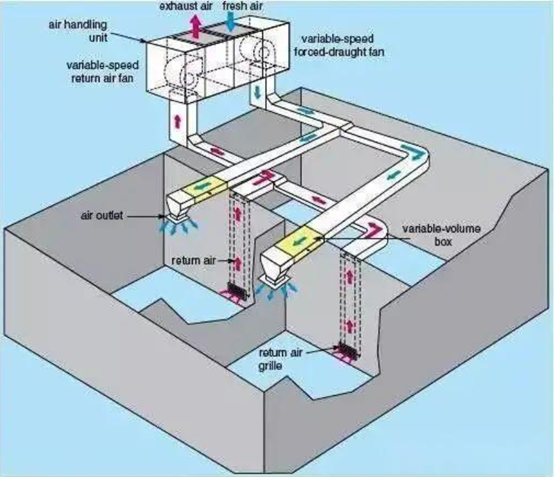
The variable air volume controller and the room thermostat together form an indoor cascade control system. The indoor temperature is the main control variable, and the air flow rate is the auxiliary control variable.
The variable air volume controller compares the actual temperature detected by the room temperature sensor with the set temperature, and outputs the adjustment signal for the required air volume. It then regulates the air valves at the variable air volume terminal to change the supply air volume, keeping the indoor temperature within the set range. At the same time, the duct pressure sensor detects the pressure changes in the duct and uses PI or PID regulation. The speed of the variable air volume air conditioning unit's blower is controlled by the frequency converter to eliminate the influence of pressure fluctuations and maintain the supply air volume.
II. Common Control Methods for Variable Air Volume Air Conditioning Systems (VAV)
3.1, Static Pressure Control
Working Principle: Under the condition of ensuring a constant static pressure at a certain point (or the average of several points) in the system duct, the required indoor air volume is adjusted by the VAVBOX damper; the system supply air volume is controlled by the difference between the static pressure in the duct and the set value at that point, and the frequency converter operates to adjust the fan speed. At the same time, the supply air temperature can be changed to meet the indoor comfort requirements.
3.2. Variable Static Pressure Control
Working Principle: By ensuring that the VAVBOX air valve is as fully open as possible (85-100%), the system's supply air volume is controlled by the static pressure in the duct. The frequency converter operates based on this, and the fan speed is adjusted accordingly. At the same time, the supply air temperature can be changed to meet the indoor comfort requirements.
3.3. Total Air Volume Control
Working Principle: By adjusting the supply air volume, the indoor temperature is controlled, and the difference between the supply air and the return air is maintained at a constant level to meet the ventilation requirements of the structure.
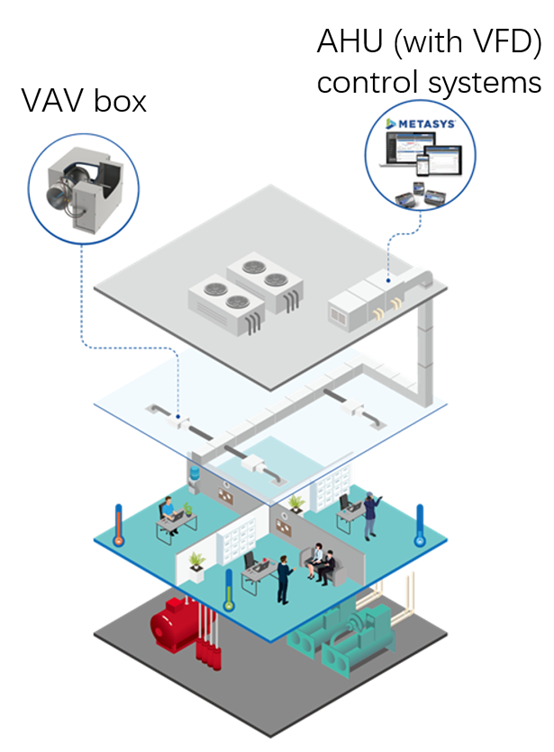
III. Basic Components of Variable Air Volume (VAV) System
1. thermostat for VAV Box .
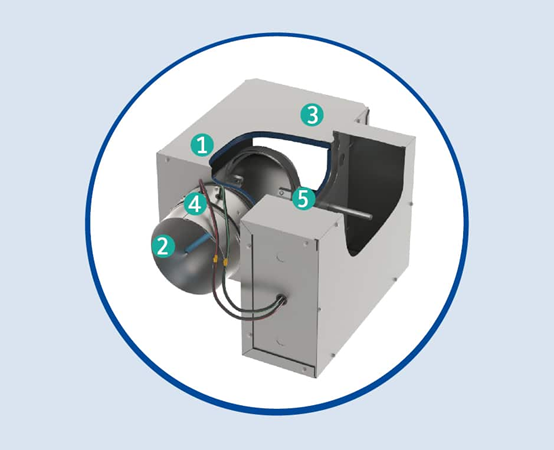
2. Variable Air Volume Terminal (VAVBOX) - equipped with a controller, sensors, air valves, BOX enclosure, and other auxiliary facilities.
3. Air Duct Static Pressure Measuring Device.
4. Air handling Unit (with VFD).
II. Development Trend of Variable Air Volume (VAV) Air Conditioning Systems
High-end office buildings usually adopt VAV air conditioning systems as the standard and refuse to use the FCU + fresh air system. "Let FCU return to hotels" is the best conclusion for this situation. The development trend of high-end office buildings will also be VAV systems, because VAV systems have unparalleled superiority in terms of technology, economy, flexibility, and low maintenance requirements.
III. Disadvantages of VAV Systems:
Although VAV systems have many advantages, with the advent of VAV systems, most systems have inevitably exposed the following problems to varying degrees.
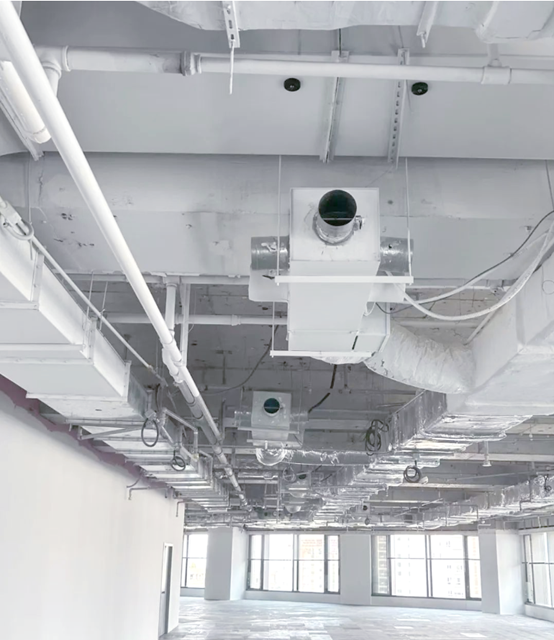
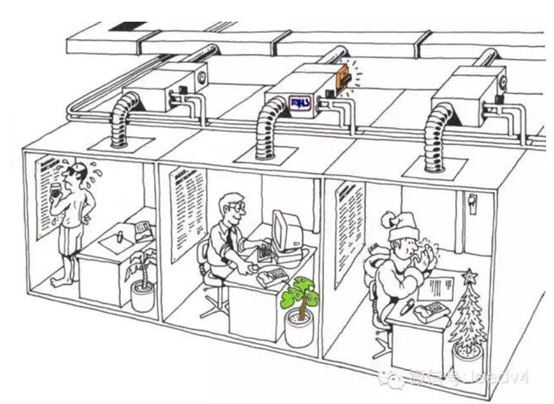
From the user's perspective, the main issues are:
1. Lack of fresh air, causing people indoors to feel oppressed;
2. Excessive positive or negative pressure in the room leading to a large amount of outdoor air infiltrating and making it difficult to open the door;
3. Higher indoor noise levels;
From the perspective of operation and management, the main problems are:
1. Instability in system operation, especially for systems with "Economizer Cycle";
2. Insignificant energy-saving effect.
In addition, the current VAV system still has some inherent drawbacks:
1. The initial investment of the system is relatively large;
2. For situations where the indoor moisture load varies greatly, if temperature control is adopted without end-of-line reheat devices, it is often difficult to ensure the indoor humidity requirements;
3. For a system, the problem may not always exist all the time. It may occur in one working condition and disappear in another.
How to truly achieve the comfortable and energy-efficient operation of the VAV system is not easy. It has higher requirements for the system's pre-delivery commissioning and the later property use. Professional and meticulous work during the commissioning process is needed. Even abnormal rework may occur due to improper commissioning. Otherwise, if some aspects are not done properly, it may be difficult to achieve the desired effect.
Here, we have specifically collected some common problems and solutions that often arise during the commissioning of VAV systems after installation, for your reference:
• The main air duct valve is not opened;
• The VAV terminal primary air valve malfunctions;
• The pipeline manufacturing and installation do not meet requirements;
• There is excessive air leakage;
• The set static pressure value of the system is too low;
• The air handling unit fan is reversed.
• Inspect the pipeline and open the air valve;
• Tighten the valve shaft or have the manufacturer repair it;
• Inspect the supply air duct and eliminate leakage by using methods such as applying sealant;
• Re-set after repeated tests;
• Swap the three-phase power lines of the motor.
(2) Overheating in the air conditioning area:
• The supply air temperature is too high;
• The supply air volume is insufficient;
• The position of the temperature sensor is unreasonable or the calibration is incorrect.
• Adjust the set value of the temperature sensor;
• Refer to the handling method in item 1;
• Place the temperature sensor in the working area, calibrate the temperature sensor and re-calibrate it.
(3) Local undercooling in the room:
• Inappropriate air distribution system;
• Excessive air outlets;
• Re-adjust the layout of the air outlets, choosing air outlets with a greater distance for the airflow to adhere to;
• Select smaller supply air outlets.
(4) Noise:
• The static pressure value set for the static pressure point of the system is too high;
• The impeller of the fan at the power end collides with the vortex shell, resulting in wear of the fan bearings and lack of lubricating oil;
• The position of the return air outlet is unreasonable.
• Adjust the set value of the static pressure point;
• Repair the deformed vortex shell of the fan, replace the bearings, and add grease;
• Avoid placing the return air outlet directly below the end.
(5) Insufficient fresh air:
• The manual air valve is not fully opened;
• The minimum fresh air volume has not been calibrated.
• Check the valve and lock the manual valve in the fully open position;
• Set the minimum fresh air volume and control the opening degree of the fresh air valve through the flow controller.
(6) Malfunction of terminal equipment:
• The measured value of primary air flow at VAV terminal is abnormal;
• The normally open and normally closed states of the air volume control are reversed;
• The control fails.
• Calibrate the sensors to ensure that the primary air inlet pipe and the equipment inlet are of the same diameter, and install the sensor with a straight pipe of 3-5 times the pipe diameter;
• Adjust the settings of the normally open and normally closed states of the air volume controller;
• Check whether the power supply, control lines of the controller and actuator are correctly connected, and test the PC board of the manufacturer to see if there are any problems.
(7) Condensation on the surface of the air outlet
• The supply air temperature is lower than the indoor dew point temperature;
• Apply insulation materials on the inner side of the air outlet or select a larger-sized terminal equipment.
(8) The relatively difficult problems existing in the VAV system units
• The air supply, return, and mixed air have an imbalance in their air volumes;
• The three air valves (air supply, return, and mixed air) are difficult to adjust simultaneously;
• During use, there are sudden changes in air volumes for air supply, return, mixed air, and fresh air.
• The air supply fan operates with the return fan;
• The return fan operates with the air supply fan;
• Variable frequency control is difficult for low air volume and low frequency operation. The difference in air supply volume and exhaust volume can cause motor burnout risks. Only by opening the balance air valve in the middle between the two fans can it be remedied (the operating loss is too large).
• When the outdoor temperature is lower than the indoor temperature and using natural wind for cooling, the three valve lines of air supply, return, and mixed air will also be out of sync. This is because the angle of the clamp-type air valve is different, and the air volume is not proportional. Including the imbalance of indoor positive and negative pressure differences. If one of the air valves fails, it will cause a series of problems such as equipment damage. To truly solve this problem, the technical difficulty of making the air supply, return, mixed air, and exhaust air volumes equal and balancing the indoor positive and negative pressure differences must be overcome.
Regarding such issues, there are currently no mature and standardized solutions. Professional personnel need to conduct repeated adjustments and detailed analyses, and search for on-site countermeasures. Additionally, there is currently a type of transfer and ventilation air conditioning unit on the market that can achieve equal proportions of supply, exhaust, and mixed air volumes, and naturally adapt to the synchronous utilization of cooling sources. This can break through the aforementioned bottlenecks and realize a breathing air conditioning unit.
II. Comparison of Variable Air Volume (VAV) System with Other Two Typical Central Air Conditioning Systems:
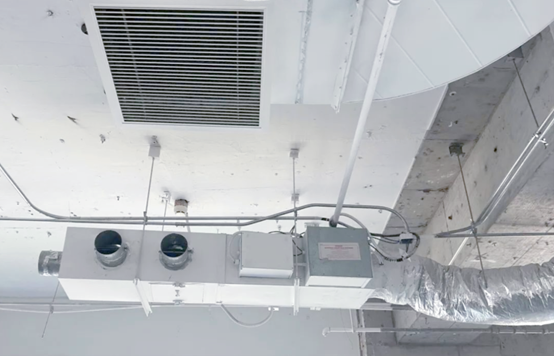
7.1 Comparison between VAV System and VRV System
VAV is a variable air volume system, which is an air conditioning terminal device, focusing on regulating the air system. VRV is a variable flow system, which is a type of air conditioning system, focusing on controlling the refrigerant flow.
The VAV (Variable Air Volume System) and the constant air volume air conditioning systems are both types of air conditioning methods for the entire air system. They both control and regulate the temperature of a certain air conditioning area by changing the supply air volume rather than the supply air temperature, thus adapting to the changes in the load of the air conditioning area. Its working principle is that when the load of the air conditioning area changes, the system terminal device automatically adjusts the supply air volume to the room to ensure that the indoor temperature remains within the designed range, thereby reducing the supply air volume of the air handling unit at low loads and reducing the rotational speed of the air handling unit's fan, achieving the purpose of energy saving.
The VRV (Variable Refrigerant Volume System) is a refrigerant flow variable system. Its structure is similar to that of a split air conditioning unit, with one outdoor unit corresponding to a group of indoor units (generally up to 16 or more). The control technology uses a variable frequency control method, controlling the rotational speed of the scroll compressor inside the outdoor unit according to the number of indoor units turned on, for the control of refrigerant flow. The design of the VRV air conditioning system consists of two parts: air conditioning equipment selection and air conditioning pipeline design; air conditioning system control design. The first part is designed by the HVAC engineers of the design institute, and the second part is usually designed by the system engineering contractor who provides a complete set of products.
It can be seen that the design and operation of these two systems have their own advantages and methods. It depends on the user to choose the method that achieves the expected effect. Both systems are good choices.
7.2 Comparison between Variable Air Volume (VAV) Air Conditioning System and Constant Air Volume (CAV) Air Conditioning System
Constant Air Volume Air Conditioning System
The characteristic of a constant air volume air conditioning system is to adjust the supply air temperature to meet the changes in indoor cooling (heating) load. By changing the supply air temperature, it can adapt to the changes in indoor load and maintain the room temperature unchanged. This is the working principle of the constant air volume air conditioning system. In this system, after the air conditioner is powered on, it operates at a constant speed, and the air volume is constant. Therefore, it is called a constant air volume air conditioning system.
Variable Air Volume Air Conditioning System
The variable air volume air conditioning system is a full-air conditioning system that uses the change in indoor supply air volume to achieve the regulation of indoor temperature. Its supply air state remains unchanged. The variable air volume system is an air conditioning system that ensures the temperature and humidity requirements of the air conditioning area by controlling the air volume. It has the advantages of single-area control capability, flexibility in local area operation, and good energy efficiency, but it has the disadvantage of complex control technology. From the system composition perspective, compared with the constant air volume system, it seems that only the terminal devices and control parts are added, but it brings challenges to the HVAC industry.
From the surface, it seems that the VAV system is just like the CAV system with some additional terminal devices and air volume regulation functions. However, due to the change in air volume and the additional terminal equipment of the VAV system, the VAV system has special characteristics different from the constant air volume system from the scheme design to equipment selection, construction drawing design, and construction and commissioning. The problems and defects of the VAV system are caused by various factors. Some may require certain technical support to solve; while some may be avoided through the efforts of the air conditioning system designers.
Subscribe for the latest news and insights
We respect your privacy
Connect on social media