
The variable air volume system ( VAV) is also one of the common forms of building air conditioning. Especially, high-end office buildings and commercial complexes prefer to adopt this type of air conditioning system. This article provides a detailed introduction to the VAV air conditioning system. The specific contents are as follows:
I. Concept, Principle and Advantages of Variable Air Volume (VAV) Air Conditioning System:
1. Concept:
Variable Air Volume (VAV) air conditioning system is an air conditioning system that regulates indoor temperature and humidity by changing the supply air volume at the terminal devices at the central location.
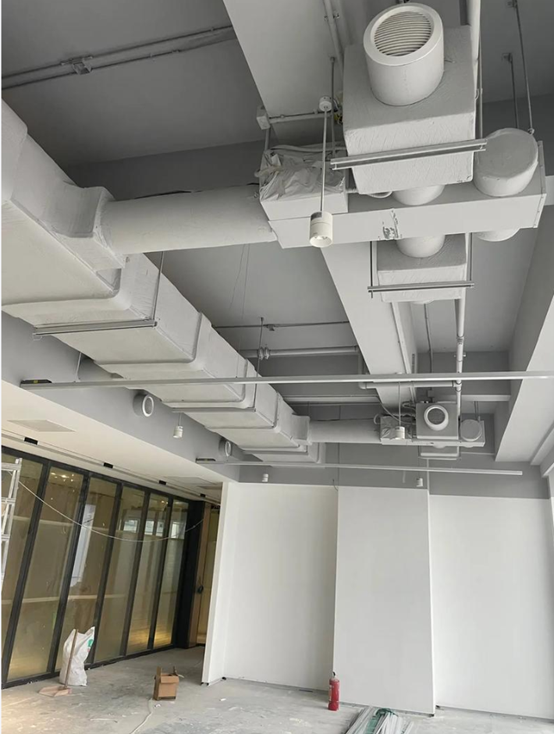
The VAV air conditioning system originated in the United States in the 1960s and has rapidly developed in countries such as Europe, America, and Japan since the 1980s. The most important reason is the significant energy-saving advantage of the VAV air conditioning system. After more than a decade of popularization and development, the VAV air conditioning system currently occupies approximately 30% of the market share of centralized air conditioning systems in Europe, America, and Japan, and is being applied in an increasing number of countries around the world. Since the 1990s, multi-story buildings and high-rise buildings that adopt VAV technology have reached 95%. The VAV air conditioning system consists of air handling units, fresh air/exhaust air/return air ducts, VAV air conditioning boxes, and room temperature controllers, among others. Among them, the VAV air conditioning box is the most important part of the system.
2. System Composition:
It mainly consists of four parts:
• thermostat.
• Variable air volume terminal (VAVBOX): equipped with a controller, sensors, dampers, BOX enclosure and other auxiliary facilities.
• Air duct static pressure measurement device.
• Air handling unit (AHU with VFD .
3. Characteristics of VAV System:
The VAV (Variable Air Volume System) air conditioning system is a type of air conditioning method within the full air system. It regulates and controls the temperature of a certain air-conditioned area by changing the supply air volume, thus adapting to the changes in the load of the air-conditioned area. The VAV system has many advantages and is highly praised by many professionals in the industry. However, to truly realize the advantages of the VAV system, in addition to reasonable design, professional system commissioning and operation management are also indispensable.
4. The working principle and process of the VAV system are as follows:
The variable air volume controller and the room thermostat together form an indoor cascade control system. The indoor temperature is the main control variable, and the air flow is the auxiliary control variable.
The variable air volume controller compares the actual temperature detected by the room temperature sensor with the set temperature, and outputs the adjustment signal for the required air volume. It then regulates the air valve at the variable air volume terminal to change the supply air volume, so as to keep the indoor temperature within the set range.
At the same time, the duct pressure sensor detects the pressure changes in the duct. It uses PI or PID regulation and controls the rotational speed of the supply fan of the variable air volume air conditioner through the frequency converter to eliminate the influence of pressure fluctuations and maintain the supply air volume.
5. Advantages of Variable Air Volume (VAV) Air Conditioning System:
The main advantages of the variable air volume air conditioning system over other types of air conditioning systems lie in the following aspects:
1) Energy Saving
Since the air conditioning system operates at partial load for most of the year, and the variable air volume air conditioning system regulates the room temperature by changing the supply air volume, it can significantly reduce the power consumption of the supply fan. According to simulation calculations, when the air volume is reduced to 80%, the power consumption of the fan will decrease to 51%; when the air volume is reduced to 50%, the power consumption of the fan will decrease to 15%. When the annual air conditioning load rate is 60%, the variable air volume air conditioning system (variable static pressure control) can save 78% of the power consumption of the fan.
2) Temperature stability
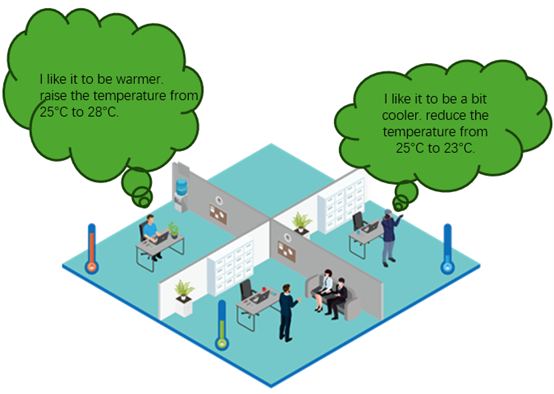
Compared with the conventional constant air volume air conditioning system, the variable air volume air conditioning system with VAV air handling units can more effectively regulate the temperature in local areas, achieve independent temperature control, and avoid the occurrence of undercooling or overheating in local areas.
3) Utilizing fresh air as a cooling source
Since the variable air volume air conditioning system is an all-air system, during transitional seasons, a large amount of fresh air can be utilized as a natural cooling source. Compared with the fan coil unit system, this can significantly reduce the energy consumption of the refrigeration unit and also improve the indoor air quality.
4) No Condensate Water Worries
The variable air volume air conditioning system is a full air system. The cold water pipeline does not pass through the ceiling space, thus avoiding the troublesome condensate water dripping and contamination of the ceiling that occurs in the fan coil system.
5) Excellent comfort and hygienic conditions:
The fan coil system operates under humid conditions, which is prone to bacterial growth and disease transmission. The variable air volume air conditioning system operates under dry conditions, with no condensation water inside, thus preventing bacterial growth.
6) Excellent system flexibility
In modern construction projects, secondary renovations are often required. If a variable air volume air conditioning system with VAV air handling units is adopted, the supply ducts and air outlets are connected by flexible hoses. The position of the air outlets can be changed arbitrarily according to the changes in room partitions, and additional air outlets can be appropriately added as needed. However, in construction projects using constant air volume systems or fan coil units, any minor local renovations are very difficult to carry out.
7) Low system noise
The fan coil system generates on-site noise, while the variable air volume air conditioning system's noise is mainly concentrated in the equipment room, with relatively lower noise levels at the user end.
8) No overcooling or overheating will occur
Compared with the general constant air volume system, the variable air volume air conditioning system with VAV air handling units can more effectively regulate the temperature in local areas, achieve independent temperature control, and avoid overcooling or overheating phenomena in local areas.
9) High control accuracy, enhancing the intelligence level of the system
It can be controlled locally or through the BAS system in the terminal room. The air volume can automatically adjust continuously within the range of 30% to 100% according to the changes in indoor load. The control accuracy is high. The variable air volume air conditioning system with DDC digital control can be operated through computer networking and connected to the building automation system, thereby enhancing the intelligence level of the building.
10) Reduce comprehensive initial investment
Due to the addition of static pressure control of the system and VAV air conditioning boxes, the cost of equipment control will increase. However, since the variable air volume air conditioning system can balance the transfer of supply air volume among various control areas within the building based on the distribution of heat and cold loads, the total supply air volume of the system can be reduced, thus enabling the reduction of the equipment capacity of the air conditioning system.
11) The variable air volume air conditioning system has a simple structure, requires less maintenance work, and has a long service life.
Above, we have affirmed the obvious advantages of the VAV system. However, please also note that: Generally speaking, when mentioning the advantages of the VAV system, it is mostly during the stage of scheme selection and design. But in the design, construction, and commissioning process, some practical issues are likely to receive less attention, especially the evaluation of the property company after operation is given less attention.
Subscribe for the latest news and insights
We respect your privacy
Connect on social media