
In the complex world of climate control, achieving the perfect balance of temperature and moisture is a constant challenge for facility managers. While standard cooling systems manage heat, the Commercial Rotary Dehumidifier has emerged as the definitive solution for precise humidity regulation. Especially within the framework of one-stop HVAC (Heating, Ventilation, and Air Conditioning) services, these units are no longer just accessories; they are central components that ensure process stability, structural integrity, and occupant comfort. By focusing on desiccant technology rather than simple refrigeration, a Commercial Rotary Dehumidifier provides a level of consistency that traditional methods simply cannot match.
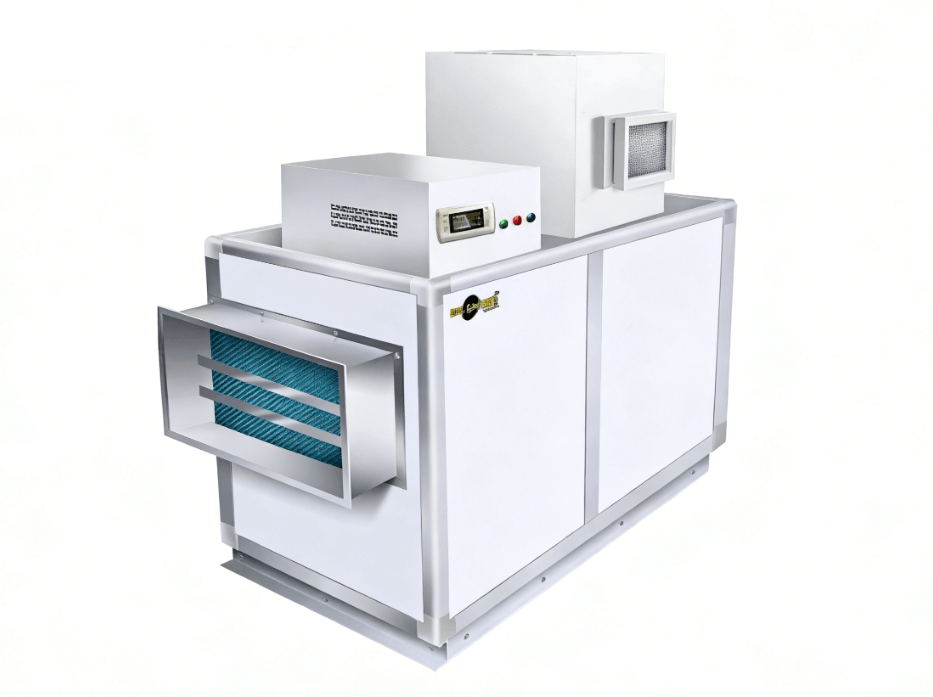
For decades, many industries relied on over-cooling air to remove moisture, a process that is both energy-intensive and often ineffective in deep-drying scenarios. However, the rise of modern manufacturing and stricter health standards has shifted the focus toward specialized desiccant technology. A Commercial Rotary Dehumidifier utilizes a rotating honeycomb wheel impregnated with silica gel or molecular sieve to physically adsorb water vapor from the air. This shift represents a move toward more sustainable and precise environmental engineering.
What sets this technology apart is its ability to operate effectively in conditions where standard systems fail. Most cooling-based dehumidifiers lose efficiency as temperatures drop, but the Commercial Rotary Dehumidifier thrives in low-temperature and low-humidity environments.
The "Rotary" aspect refers to the desiccant runner, which continuously cycles between the process air stream and a reactivation air stream. This constant movement ensures that the drying process is uninterrupted, providing a steady dew point that is critical for sensitive operations like pharmaceutical packaging or lithium-ion battery production.
In a one-stop HVAC ecosystem, energy efficiency is paramount. Modern units are now designed to integrate with waste heat sources. By utilizing reclaimed heat from other parts of the HVAC system to "reactivate" the desiccant wheel, operational costs are significantly reduced, aligning with global green building standards.
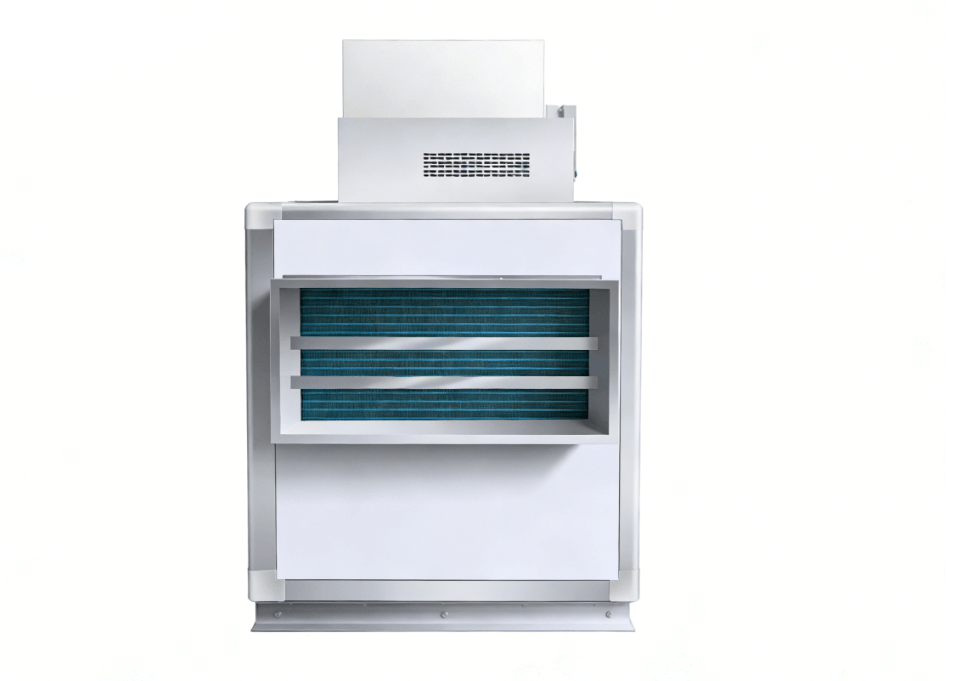
Choosing a one-stop HVAC provider like Pofin means looking for synergy between different components. The Commercial Rotary Dehumidifier plays a versatile role across various sectors:
Cold Chain and Food Processing: In large-scale cold storage, humidity leads to frost buildup on evaporators and slippery floors. Integrating a rotary system ensures dry air, reducing defrost cycles and enhancing safety.
Pharmaceutical and Laboratory Environments: Precise moisture levels are non-negotiable here. A Commercial Rotary Dehumidifier prevents organic growth and ensures that powdered medicines do not clump during production.
Public Infrastructure and Archives: From museums to large libraries, protecting assets from mold and degradation requires the constant, low-grain air that only desiccant technology can provide.
The decision to implement a Commercial Rotary Dehumidifier often stems from a need for long-term reliability. Unlike compressor-based systems that involve complex refrigerant cycles and potential leaks, the mechanical simplicity of a rotary runner offers a longer service life with predictable maintenance intervals. Furthermore, the air quality is often superior, as the desiccant material inherently inhibits the growth of bacteria and fungi, acting as a secondary purification layer for the facility.
When you source your climate control needs from a single provider, the Commercial Rotary Dehumidifier is calibrated to work in harmony with your air handling units (AHUs) and chillers. This holistic approach prevents "equipment conflict," where a cooler and a dehumidifier might otherwise work against each other, wasting energy. Instead, a synchronized system uses smart sensors to adjust the rotation speed and reactivation temperature based on real-time indoor air quality (IAQ) data.
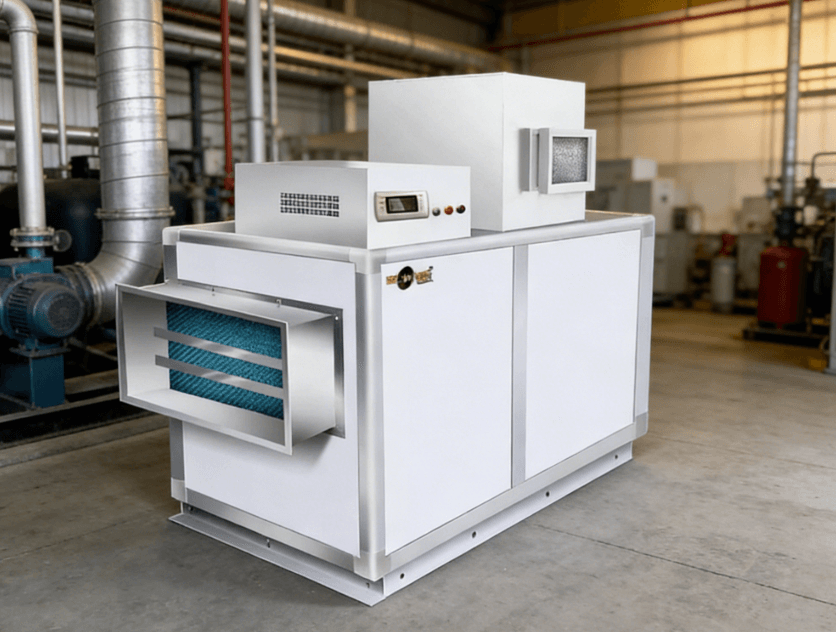
We believe that industrial progress should not come at the cost of the environment. The latest generation of the Commercial Rotary Dehumidifier is built with recyclable materials and high-efficiency motors. By maintaining optimal humidity, these units also protect the building envelope from rot and corrosion, effectively extending the lifespan of the entire facility. This is the core value of high-end HVAC engineering: providing a solution that is as durable as it is effective.
The landscape of industrial climate control is changing, and the Commercial Rotary Dehumidifier stands at the forefront of this transformation. For those seeking a one-stop HVAC solution, understanding the technical depth and application versatility of these units is the first step toward operational excellence. By investing in quality desiccant technology, you are not just buying a machine; you are securing the future of your production environment and the health of everyone within it.
Q1: How does a rotary dehumidifier differ from a standard refrigerant dehumidifier?
A standard unit uses a cooling coil to condense water, which works best in warm, humid air. A Commercial Rotary Dehumidifier uses a desiccant wheel to adsorb moisture, making it far more effective in cold climates or when very low humidity levels (below 40%) are required.
Q2: Can these units be integrated into existing HVAC ductwork?
Yes, they are designed for seamless integration. In a one-stop HVAC setup, the dehumidifier is often placed in series with the Air Handling Unit to ensure the air is treated for both temperature and moisture before entering the workspace.
Q3: What maintenance is required for the desiccant wheel?
The wheels are remarkably durable. Routine maintenance involves checking the seals, ensuring the drive motor is functioning, and cleaning the filters to prevent dust from clogging the honeycomb structure. With proper care, the wheel can last for many years.
Q4: Is it energy-efficient for large warehouses?
Absolutely. While the initial setup requires energy for reactivation, the ability to use waste heat and the reduction in "over-cooling" costs usually results in a lower total cost of ownership compared to traditional HVAC methods.
Subscribe for the latest news and insights
We respect your privacy
Connect on social media