
Managing industrial thermal energy requires precision and reliability. You likely need a solution that maximizes heat transfer performance without consuming excessive floor space. A plate heat exchanger (PHE) often offers superior efficiency compared to traditional shell-and-tube designs. I will explain how these units function and how to evaluate specifications for your operational needs.
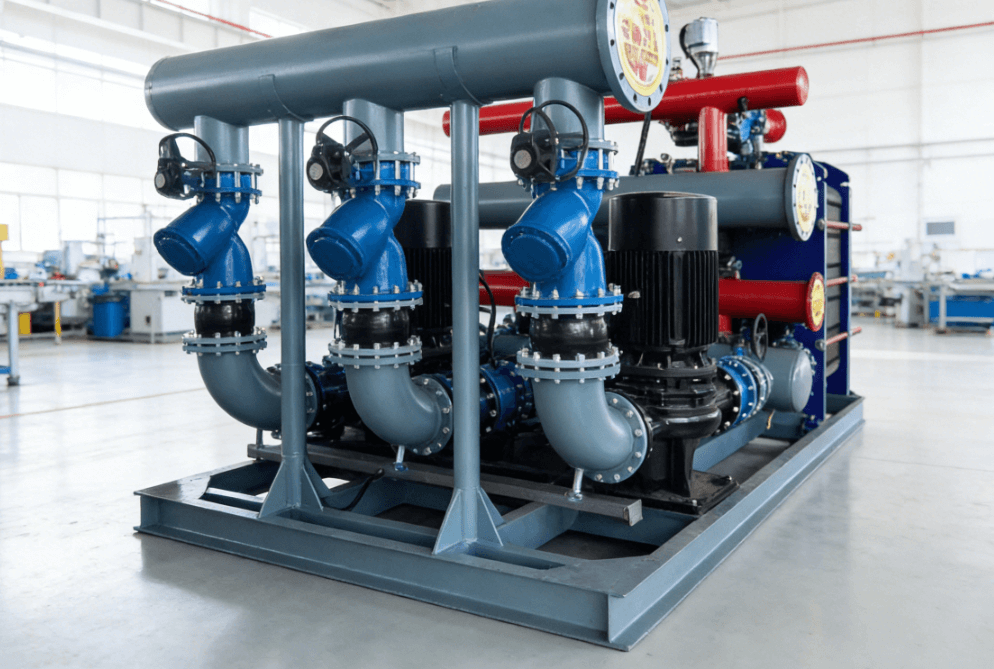
To understand the value of this equipment, we must first clarify the basics. What is a heat exchanger ? It is a specialized device designed to transfer thermal energy between two fluids without mixing them. This process is critical for cooling machinery, pasteurizing liquids, or recovering waste heat.
How does a heat exchanger work in a plate configuration? The unit consists of a series of corrugated metal plates compressed together within a rigid frame. These corrugations create narrow, alternating channels for fluid movement. Hot fluid flows through one set of channels, while cold fluid flows through the adjacent ones.
This design creates a massive surface area within a small physical footprint. The specific geometry of the plates induces turbulence in the fluid, even at low velocities. High turbulence disrupts the boundary layer, which significantly increases the heat transfer coefficient. This allows the unit to exchange heat rapidly and efficiently.
Selecting the right equipment provider is as important as the technology itself. Reliable plate heat exchanger manufacturers adhere to strict international standards to ensure safety and performance. You should look for compliance with the ASME Boiler and Pressure Vessel Code or ISO 15547 . These standards ensure the equipment can safely handle your system's operational pressure and temperature.
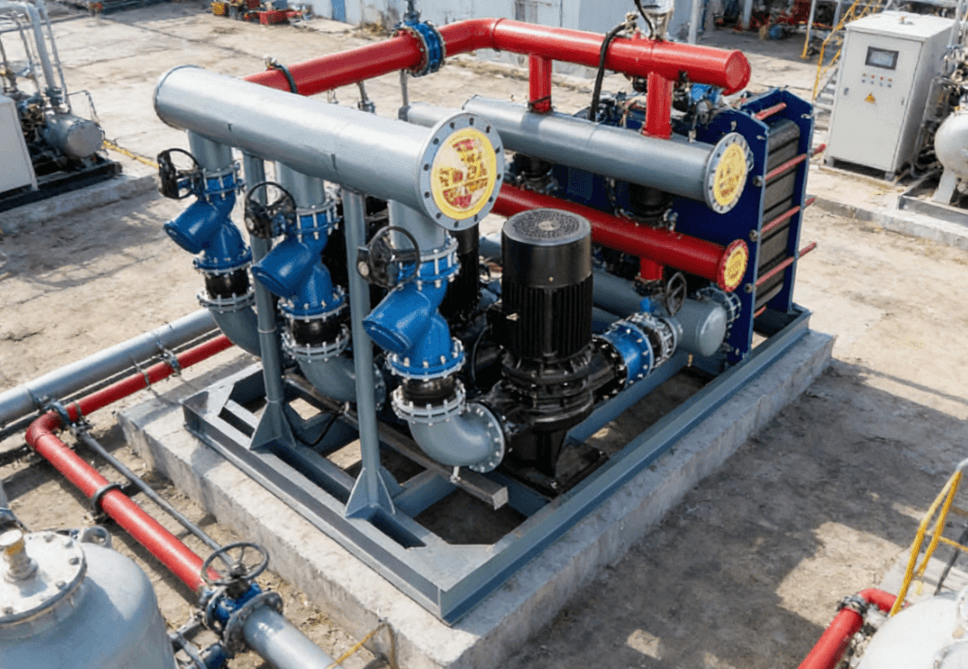
Material selection is another critical evaluation criterion for long-term durability. Standard applications typically use 304 or 316 Stainless Steel for general water cooling. However, if your process involves seawater or corrosive chemicals, you must insist on Titanium or Hastelloy plates.
You must also assess the gasket materials offered by the manufacturer. The gasket seals the plates and dictates the maximum operating temperature of the unit. EPDM is suitable for water and steam, while Nitrile is preferred for oil-based applications. A manufacturer’s ability to provide the correct material combination determines the longevity of your asset.
Switching to or selecting a plate design offers distinct commercial benefits for industrial operations. The most obvious advantage is high thermal efficiency due to the counter-current flow. Because the plates are thin and the flow is turbulent, these units achieve much closer temperature approaches. This means you can cool fluids closer to the cooling medium's temperature.
Space optimization is another key factor for crowded industrial facilities. A plate heat exchanger is significantly smaller than a shell-and-tube unit of the same capacity. This compact size frees up valuable plant floor space for other production equipment. It allows for easier installation in tight mechanical rooms or on skids.
Maintenance teams also prefer the accessibility of this design for routine upkeep. You can easily loosen the tie bolts and slide the plates back for inspection. This makes mechanical cleaning straightforward and reduces expensive downtime. Furthermore, these units are modular. If your production capacity increases, you can simply add more plates to the existing frame.
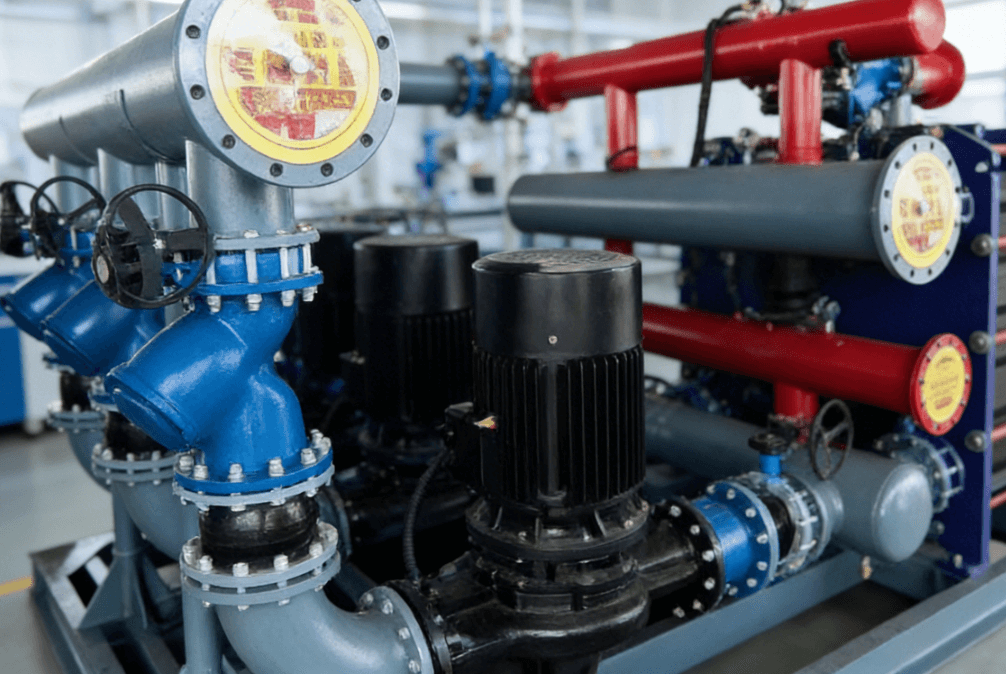
Choosing the correct model depends on defining your process parameters accurately. You must calculate the required flow rates and the specific temperature differential for both fluids. These figures dictate the number of plates and the surface area required for the duty.
Consider the allowable pressure drop in your piping system carefully. A higher allowable pressure drop generally increases heat transfer efficiency but raises pumping costs. You need a balanced design that optimizes thermal performance without exceeding pump capacities.
We provide detailed specifications to match these precise engineering
requirements. You can review our technical data and model options at
A plate heat exchanger maximizes thermal efficiency while minimizing physical space requirements. By understanding the working principles and verifying material standards, you can secure a cost-effective solution. Correct selection ensures reliable cooling and lower energy costs for your facility.
Q1: What is the main disadvantage of a plate heat exchanger?
The main limitation is the pressure and temperature range, which is restricted by the gasket materials and plate compression strength.
Q2: How often should I clean a plate heat exchanger?
Cleaning frequency depends on the fluid quality, but you should inspect the unit whenever pressure drop increases or heat transfer performance declines.
Q3: Can I use a plate heat exchanger for viscous fluids?
Yes, but you must select wide-gap plates or specialized designs to prevent blockages and ensure proper flow.
Q4: What is the difference between gasketed and brazed plate heat exchangers?
Gasketed units can be dismantled for cleaning and expansion, while brazed units are sealed permanently for higher pressure tolerance but cannot be opened.
International Organization for Standardization (ISO) - ISO 15547: Petroleum, petrochemical and natural gas industries — Plate-type heat exchangers
American Society of Mechanical Engineers (ASME) - ASME Boiler and Pressure Vessel Code (BPVC)
ASHRAE - Handbook regarding Heat Transfer Equipment
Subscribe for the latest news and insights
We respect your privacy
Connect on social media