
In the current landscape of commercial building management, the pursuit of energy efficiency and indoor air quality has led to significant innovations in terminal airflow control. At the heart of this evolution is the Round Single Duct VAV Terminal Box, a critical component within sophisticated Variable Air Volume (VAV) systems. For HVAC professionals and facility managers seeking a one-stop solution, this device serves as the primary gateway for modulating air distribution to specific zones. Unlike constant volume systems, VAV technology allows for precise adjustments based on real-time demand, ensuring that energy is not wasted on unoccupied spaces. By understanding the mechanical nuances and strategic benefits of this terminal unit, users can significantly enhance the comfort and operational sustainability of their environments.
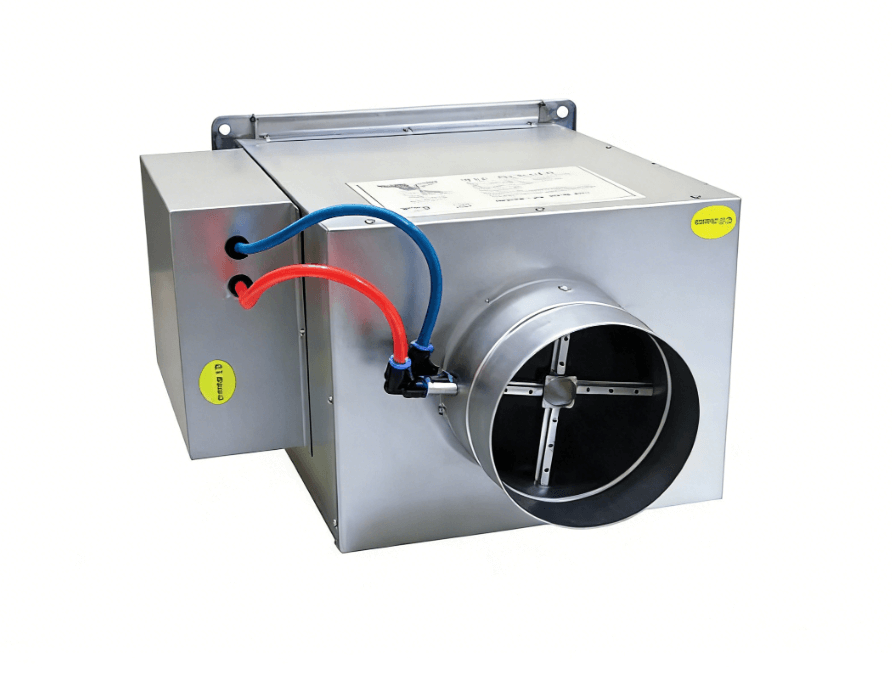
The architectural decision to utilize a Round Single Duct VAV Terminal Box often stems from the need for superior aerodynamic performance and ease of installation. Standard HVAC ductwork frequently utilizes round configurations due to their inherent structural rigidity and lower friction loss compared to rectangular alternatives. When the terminal box features a round inlet, it allows for a more laminar transition of airflow from the main branch into the control unit. This design minimizes turbulence, which is essential for accurate airflow measurement and noise reduction. Furthermore, the circular geometry facilitates a tighter seal at connection points, reducing the risk of air leakage that could compromise the efficiency of the entire system.
Precision in a Round Single Duct VAV Terminal Box depends heavily on its ability to sense velocity pressure with high accuracy. Most high-quality units incorporate a multi-point differential pressure sensor located at the inlet. This sensor averages the air velocity across the entire cross-section of the duct, providing a reliable signal to the VAV controller even when the airflow is not perfectly uniform. Because the sensor is integrated into the round inlet, it can detect subtle changes in demand, allowing the damper to modulate effectively. This sensitivity is vital for maintaining the minimum ventilation rates required by modern building codes while preventing over-cooling during low-load periods.
Beyond the internal mechanics, the casing of a Round Single Duct VAV Terminal Box must withstand the mechanical pressures of the supply air while providing excellent thermal and acoustic insulation. Manufacturers typically utilize galvanized steel for the outer shell to ensure long-term durability and corrosion resistance. Inside, the box is lined with specialized fiberglass or closed-cell foam insulation. This lining serves a dual purpose: it prevents condensation on the outer surface of the box when handling cold primary air and significantly dampens the "radiated" noise generated by the air moving through the damper. For users of one-stop HVAC products, this focus on casing integrity ensures a quiet and maintenance-free operation for decades.
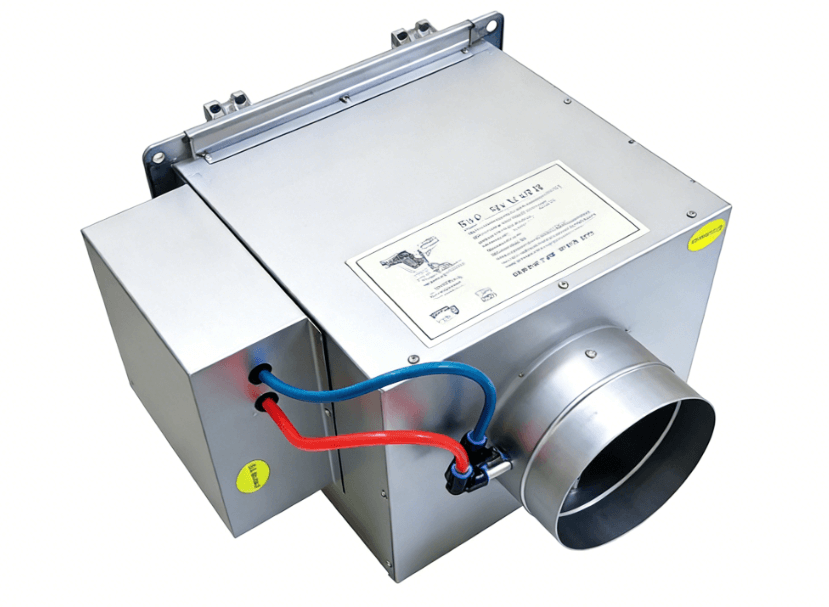
A primary advantage of the Round Single Duct VAV Terminal Box is its seamless compatibility with modern Building Automation Systems (BAS). As buildings transition toward "smart" operations, the terminal box acts as the final executor of the central plant’s logic. Through DDC (Direct Digital Control) interfaces, the terminal box communicates its current airflow, damper position, and zone temperature to a centralized network.
The mechanical movement within a Round Single Duct VAV Terminal Box is governed by a high-torque actuator that adjusts the damper blade. Unlike older pneumatic systems, modern electronic actuators provide near-instantaneous response times and absolute positioning. When the thermostat in a specific room detects a rise in temperature, the actuator opens the damper in precise increments to increase the cooling volume. This granular control prevents the "hunting" behavior—where the system fluctuates wildly between fully open and fully closed—that often occurs in less sophisticated airflow regulators. For the building owner, this translates to a more stable indoor climate and a marked reduction in peak energy demand.
While energy saving is a major driver, the Round Single Duct VAV Terminal Box also plays a defensive role in protecting occupant health. Modern HVAC logic ensures that the terminal box never closes completely; instead, it maintains a "minimum flow" setpoint. This ensures that a baseline of fresh, filtered air is always entering the occupied zone, preventing the buildup of CO2 and volatile organic compounds (VOCs). By balancing the needs of thermal comfort with the requirements of ventilation, the VAV terminal box becomes an indispensable tool for achieving green building certifications such as LEED or WELL.
Choosing a Round Single Duct VAV Terminal Box as part of a one-stop HVAC procurement strategy offers significant logistical and performance advantages. When the terminal units are engineered to match the central air handling unit and the branch ductwork, the entire system operates with a higher degree of synergy. This holistic approach simplifies the commissioning process—the phase where the system is tested and balanced—because the performance curves of the terminal boxes are already optimized for the specific fan pressures of the main system.
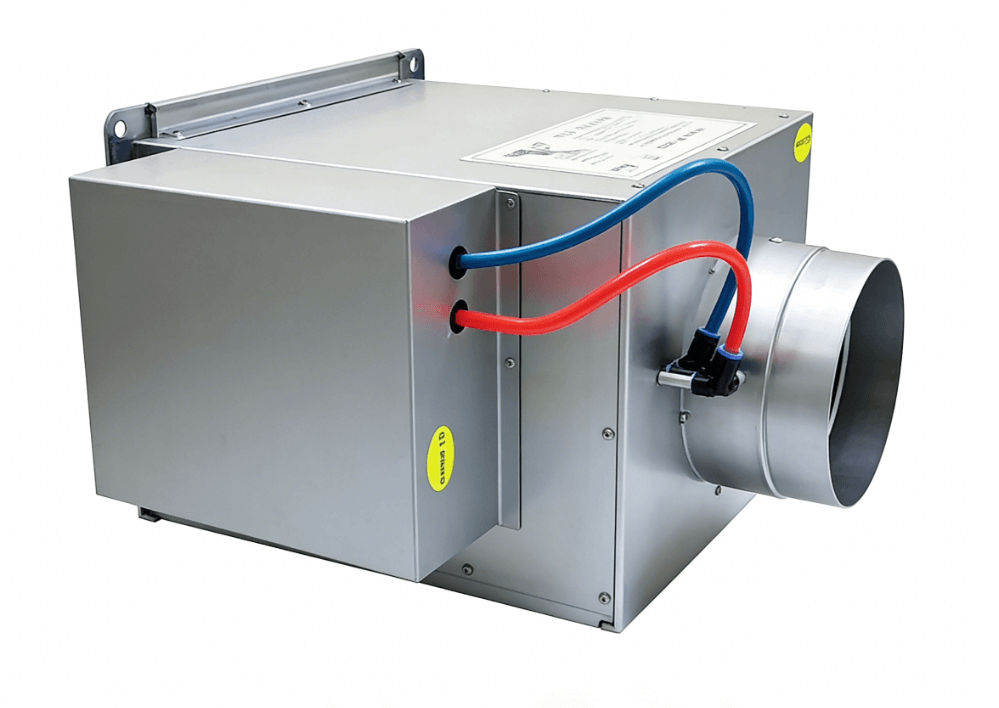
The round inlet design of the Round Single Duct VAV Terminal Box makes it remarkably easy to install in tight plenum spaces. Contractors can use standard flexible or rigid round ducting to connect the unit, which reduces labor costs and the need for expensive custom transitions. Furthermore, since these units are often designed with accessibility in mind, the internal components like the sensor and actuator can be serviced without dismantling the entire duct run. This ease of maintenance is a key value for facility managers who need to minimize disruptions in active office or healthcare environments.
From a financial perspective, the ROI of a Round Single Duct VAV Terminal Box is realized through cumulative energy savings. By only delivering the exact amount of air required at any given moment, the central fans can operate at lower speeds, which follows the fan affinity laws—where a small reduction in fan speed leads to a massive reduction in power consumption. Over the lifecycle of a commercial building, the energy saved by these precision terminal units often pays for the initial capital investment several times over. It is this combination of mechanical simplicity and economic efficiency that makes the round VAV box a cornerstone of modern industrial and commercial ventilation.
Ultimately, the implementation of a Round Single Duct VAV Terminal Box represents a commitment to high-performance building standards. It is a device that embodies the core values of modern engineering: efficiency, reliability, and human-centric design. By focusing on the aerodynamic benefits of round inlets and the intelligence of digital control integration, users can create environments that are not only comfortable but also environmentally responsible. As we move toward a future where every kilowatt of energy must be accounted for, the precision offered by the VAV terminal box will remain an essential asset in the global HVAC toolkit.
Q1: What is the main difference between a round and rectangular VAV terminal box?
A1: The Round Single Duct VAV Terminal Box typically offers better aerodynamic performance, lower pressure drop, and easier connection to standard round ductwork, which often leads to quieter operation and simpler installation compared to rectangular units.
Q2: Can the Round Single Duct VAV Terminal Box be used for heating?
A2: While the basic "single duct" model controls primary air (usually cooled), it can be equipped with an auxiliary electric or hot water reheat coil. This allows the unit to provide heating to a specific zone when the primary air volume is at its minimum setpoint.
Q3: How often do the airflow sensors in these units need calibration?
A3: Modern multi-point differential pressure sensors are very stable. However, it is a best practice to check the calibration during the annual HVAC system audit to ensure that the Round Single Duct VAV Terminal Box is still delivering the volumes reported by the controller.
Q4: Is it possible to retrofit these terminal boxes into an existing building?
A4: Yes, they are excellent for retrofits. Their compact round design allows them to fit into existing ceiling spaces where larger rectangular units might not, provided the existing ductwork can be adapted to the round inlet size.
Subscribe for the latest news and insights
We respect your privacy
Connect on social media