
Managing energy costs in commercial buildings is a constant challenge for facility managers. You need to maintain occupant comfort without running fans at full speed when it isn’t necessary. This is where a Variable Air Volume system becomes a critical asset for modern infrastructure. Unlike constant volume systems, VAV setups adjust airflow based on real-time demand. This approach offers precise temperature control and significant operational savings.
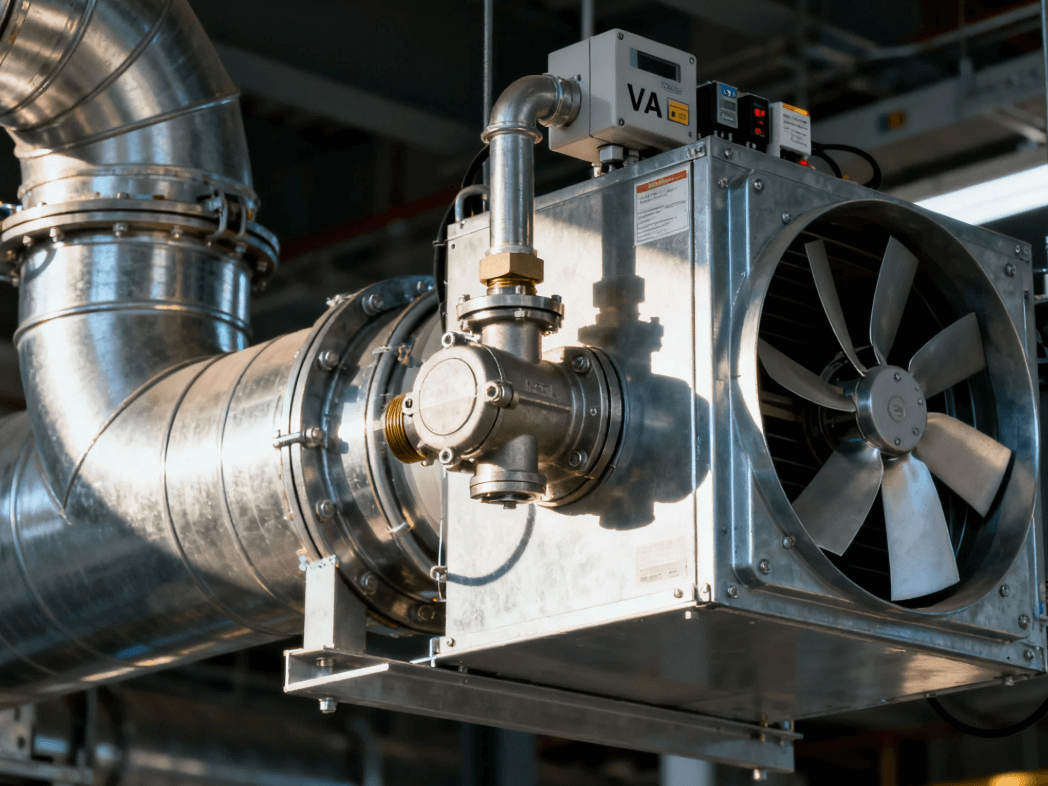
To understand the value, we must look at the mechanics. How does a vav hvac system work differently from traditional setups? In a standard Constant Air Volume (CAV) system, the fan runs at a single speed. It regulates temperature by heating or cooling the air supply, regardless of the actual load.
A variable air volume hvac system operates on a more intelligent principle. It supplies air at a constant temperature but varies the airflow volume. The system relies on a central air handling unit and VAV terminal boxes located in specific zones.
These terminal boxes contain dampers that open or close based on the room’s thermostat. When a zone reaches its set point, the damper restricts airflow. Simultaneously, a Variable Frequency Drive (VFD) slows down the main fan. This reduction in fan speed is where the primary energy conservation occurs.
Switching to VAV is often a strategic financial decision. In my professional analysis, the benefits of vav heating and cooling systems usually outweigh the initial complexity.
The most immediate impact is on your utility bills. Fans consume a large portion of HVAC energy. By reducing fan speed during partial load conditions, you reduce power consumption exponentially.
Commercial buildings rarely have uniform thermal needs. A conference room might be crowded and hot, while an adjacent office is empty. Variable Air Volume systems allow you to cool the conference room while restricting air to the office.
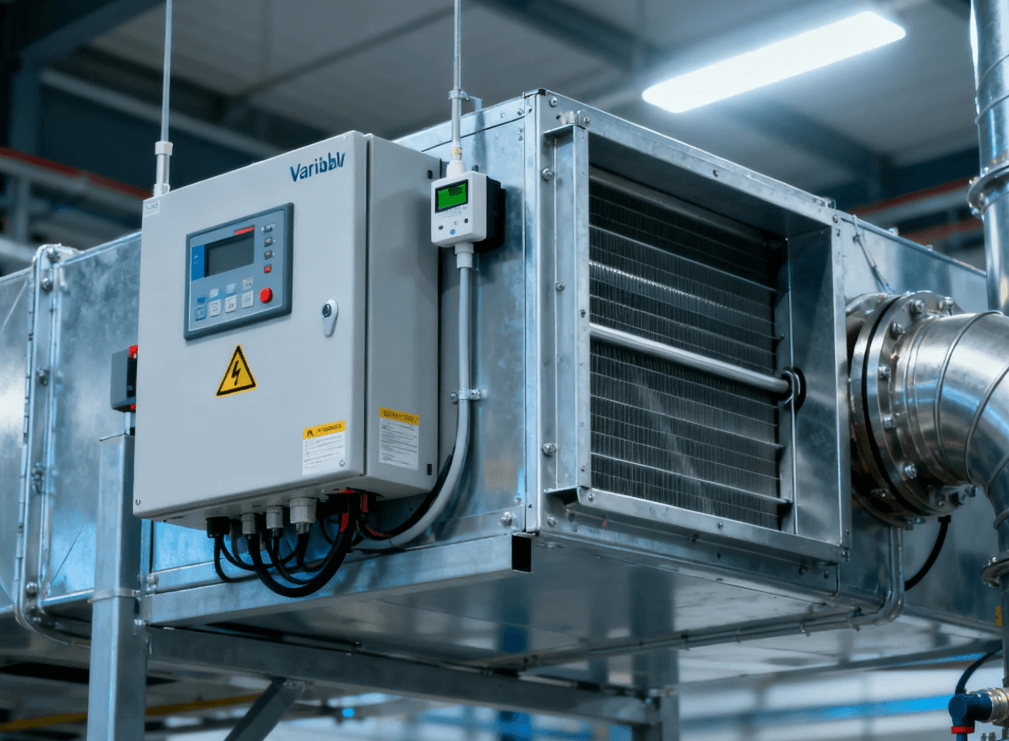
Equipment longevity is a priority for B2B clients. Because the system rarely runs at 100% capacity, there is less strain on the fans and compressors. This generally leads to extended equipment life and lower maintenance costs over time.
At lower airflow rates, the air spends more time in contact with cooling coils. This process removes more moisture from the air stream. The result is better humidity control without requiring additional equipment.
When evaluating infrastructure, you must compare the Variable Air Volume system against the CAV alternative.
CAV systems are cheaper to install. They require simpler controls and less programming. However, they are expensive to run because they constantly operate at peak flow.
VAV systems have a higher upfront cost due to the VAV boxes and complex controls. Yet, the return on investment (ROI) is typically realized within a few years through energy savings. For a building larger than 10,000 square feet, the operational savings are substantial.
If your building layout changes, VAV systems adapt easily. You can reassign VAV boxes to different thermostats or zones without major ductwork reconstruction. This flexibility is vital for commercial spaces that undergo frequent tenant improvements.
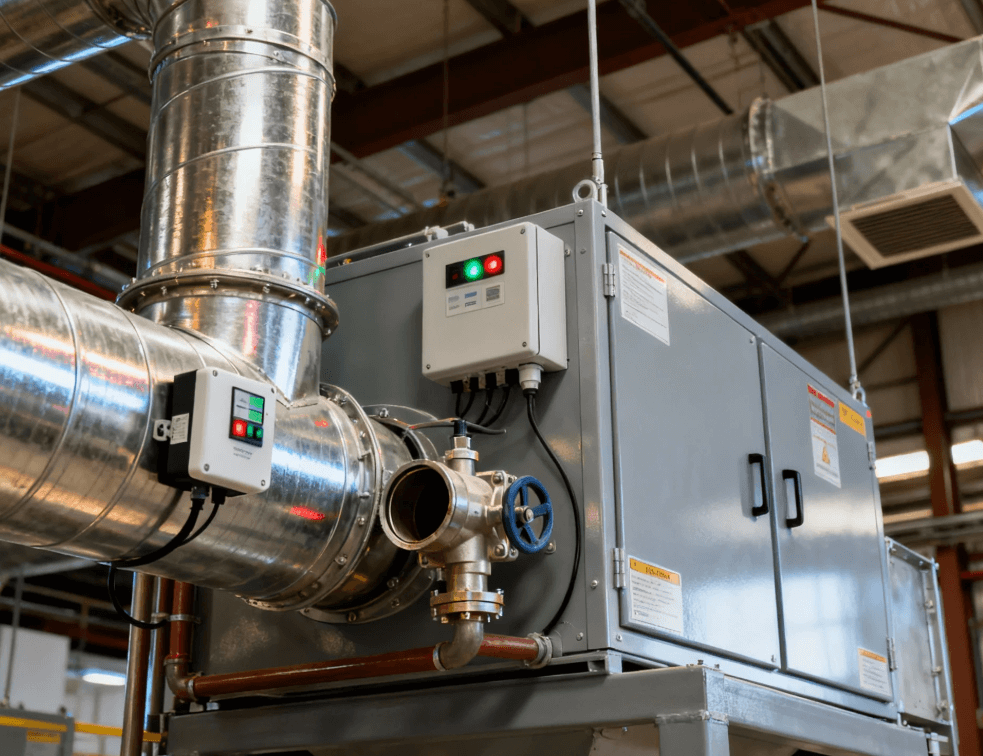
The efficiency of your HVAC design relies heavily on the quality of its components. Even a well-designed architecture will fail if the control actuators are imprecise.
The core of the VAV box is the damper actuator. It must respond instantly to signals from the thermostat. If the actuator lags or overshoots, the system will hunt for the setpoint, wasting energy.
Commercial systems run continuously. You need components tested for high-cycle durability. A failed controller in a ceiling plenum is difficult and costly to replace.
Ensure that the VAV controllers integrate seamlessly with your Building Management System (BMS). Seamless communication allows for better data tracking and predictive maintenance.
For those specifying or upgrading systems, selecting the right hardware is the first step toward stability. You can evaluate high-precision components and control solutions on our Variable Air Volume system products page to ensure your system meets rigorous performance standards.
A Variable Air Volume system is the standard for energy-efficient commercial climate control. It reduces operational costs through variable fan speeds and provides superior comfort via zoning. While the installation is complex, the long-term ROI makes it the smart choice for B2B facilities. Prioritize high-quality components to ensure your system delivers on its efficiency promises.
1. What is the main difference between VAV and CAV systems?
A VAV system varies the airflow amount while keeping temperature constant, whereas a CAV system keeps airflow constant but varies the temperature.
2. Is a VAV system suitable for small buildings?
Typically, no; the complexity and cost of VAV systems are usually not justifiable for buildings under 10,000 square feet compared to simpler DX split systems.
3. How much energy can a VAV system save?
According to industry data, replacing a CAV system with a VAV system can reduce fan energy consumption by 30% to 70%, depending on the building load.
4. Do VAV systems require special maintenance?
Yes, VAV boxes involve dampers, actuators, and sensors that require periodic inspection to ensure they are not stuck or uncalibrated.
ASHRAE (American Society of Heating, Refrigerating and Air-Conditioning Engineers)
U.S. Department of Energy - Building Technologies Office
Whole Building Design Guide (WBDG)
Subscribe for the latest news and insights
We respect your privacy
Connect on social media