
In the modern architectural era, where industrial aesthetics and open-ceiling designs are increasingly favored, traditional air conditioning units often struggle to meet both aesthetic and functional demands. However, the introduction of the Jet Flow Exposed Fan Coil Unit has fundamentally transformed how engineers approach large-space climate control. Unlike standard fan coils that rely on short-range diffusion, this advanced terminal device is engineered for long-distance air throw and high-velocity circulation. For one-stop HVAC product users looking for a balance between cooling capacity and structural elegance, understanding the mechanics behind this specialized equipment is essential. This article explores the technical depth, strategic applications, and long-term value of integrating these units into your centralized climate system.
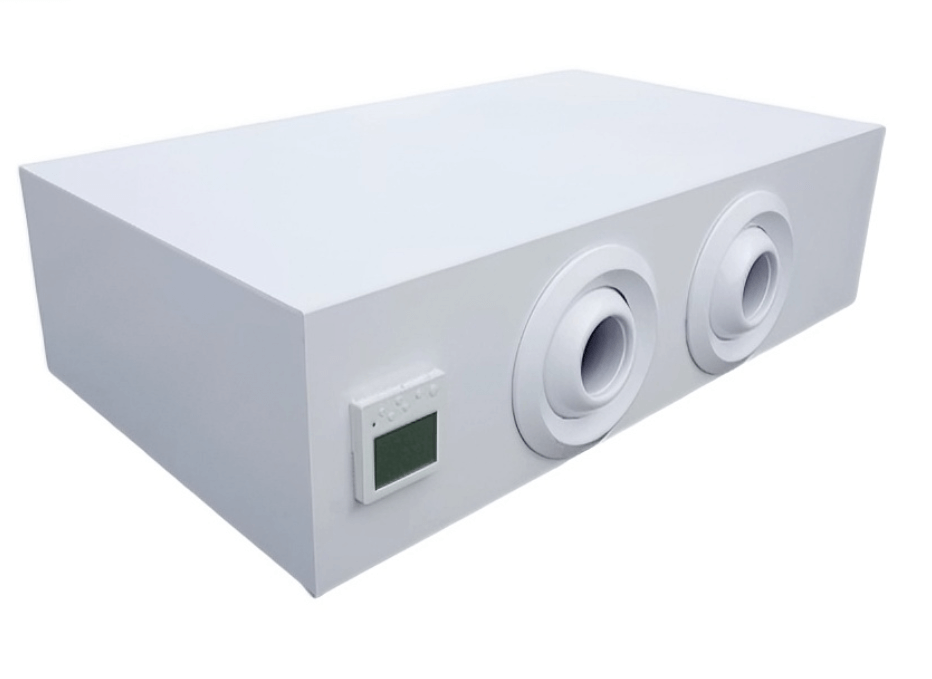
The core distinction of the Jet Flow Exposed Fan Coil Unit lies in its specialized nozzle design and aerodynamic internal structure. Traditional exposed units often experience "cold air dropping" near the unit, leading to uneven temperature distribution. In contrast, the jet flow technology utilizes high-static pressure to project air across significant distances—often reaching up to 15 to 20 meters without the need for additional ductwork.
By utilizing a convergence nozzle, the Jet Flow Exposed Fan Coil Unit accelerates air as it exits the heat exchanger. This creates a focused air "jet" that can penetrate the stagnant air layers commonly found in high-ceiling environments such as lobbies, exhibition centers, and airports. The internal fan assembly is typically balanced with high-precision components to ensure that while the air velocity is high, the acoustic footprint remains remarkably low. Consequently, users benefit from a quiet environment where the temperature remains consistent from the unit’s base to the furthest corner of the room.
The efficiency of the Jet Flow Exposed Fan Coil Unit is not merely a result of its fan speed but is deeply rooted in its heat exchanger design. Most high-quality units employ hydrophilic aluminum fins and seamless copper tubes to maximize the surface area for thermal transfer. This ensures that the air being "jetted" into the space reaches the desired set point quickly, reducing the overall workload on the central chiller or boiler. For the HVAC professional, this translates into lower energy consumption and a prolonged equipment lifespan.
When sourcing components for a comprehensive HVAC project, the Jet Flow Exposed Fan Coil Unit offers a unique "plug-and-play" advantage that simplifies the installation logistics. Since these units are designed to be "exposed," they eliminate the high cost of ceiling materials and the labor-intensive process of installing concealed ductwork.
For facility managers, maintenance is the most significant long-term expense. The Jet Flow Exposed Fan Coil Unit provides immediate access to the filtration system and drainage pan without the need to remove ceiling tiles or navigate through tight crawl spaces. This accessibility ensures that routine cleaning is performed more frequently, which maintains indoor air quality and prevents the common "sick building syndrome" associated with neglected HVAC terminals.
From a logistical standpoint, the integration of the Jet Flow Exposed Fan Coil Unit into a one-stop HVAC solution reduces the total bill of materials. By minimizing the requirement for diffusers, dampers, and insulation for ducts, the initial capital expenditure (CAPEX) is significantly reduced. Furthermore, the robust outer casing—often treated with anti-corrosive powder coatings—ensures the unit remains aesthetically pleasing for years, even in high-traffic commercial environments.
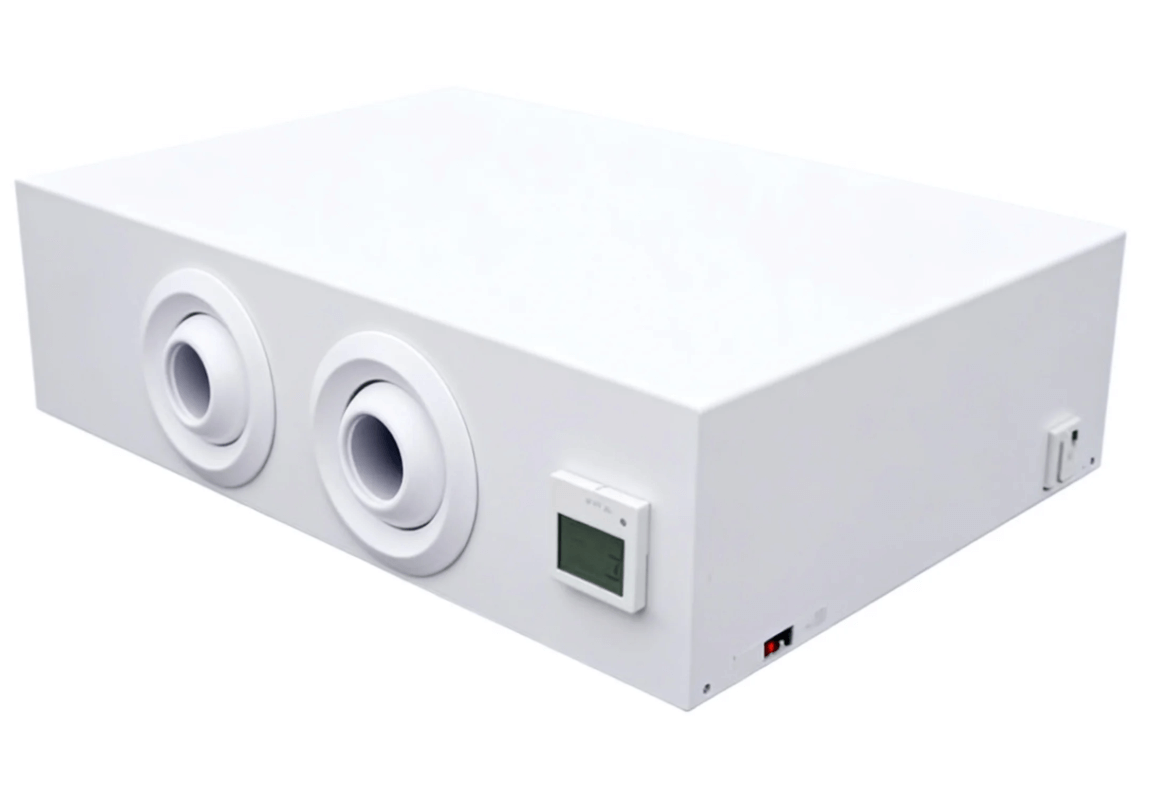
The modern HVAC user is no longer satisfied with just "temperature control"; the focus has shifted toward holistic comfort and air health. The Jet Flow Exposed Fan Coil Unit excels in this area by promoting high-rate air exchange.
Because the jet flow mechanism creates a vigorous secondary air circulation, it prevents the buildup of carbon dioxide and pollutants in "dead zones." Many models can be equipped with advanced PM2.5 filters or ultraviolet (UV) sterilization modules, turning the Jet Flow Exposed Fan Coil Unit into a primary defense line against airborne pathogens. This is particularly valuable in public health-conscious spaces like modern retail centers or healthcare facilities where air purity is a non-negotiable standard.
To achieve the highest efficiency, these units are increasingly equipped with brushless DC (BLDC) motors and smart controllers. When the Jet Flow Exposed Fan Coil Unit is integrated into a central BMS, its performance can be modulated based on occupancy sensors and real-time thermal loads. This intelligence allows for the precise delivery of cooling or heating only where it is needed, embodying the core values of sustainability and professional resource management.
In summary, the Jet Flow Exposed Fan Coil Unit is not just a terminal device; it is a strategic tool for high-performance HVAC engineering. By solving the problems of air throw distance, installation complexity, and maintenance accessibility, it provides a superior alternative to traditional terminal units. For users who prioritize a one-stop procurement model, selecting high-quality jet flow units ensures that the final climate control system is as efficient as the central plant itself. As architecture continues to move toward open, airy, and multifunctional spaces, the reliance on advanced technologies like the Jet Flow Exposed Fan Coil Unit will only continue to grow.
Q1: What is the maximum air throw distance of a Jet Flow Exposed Fan Coil Unit?
A: Depending on the model and static pressure settings, a high-quality Jet Flow Exposed Fan Coil Unit can typically achieve an effective air throw of 15 to 25 meters, making it ideal for large spaces.
Q2: Is the noise level higher than a standard fan coil unit?
A: Despite the higher air velocity, modern units are designed with sound-attenuating internal insulation and balanced fans. The noise level is generally comparable to standard units, especially when using DC variable-speed motors.
Q3: Can these units be used for both heating and cooling?
A: Yes, the Jet Flow Exposed Fan Coil Unit is a versatile terminal that can be connected to either a chiller (for cooling) or a hot water boiler/heat pump (for heating), providing year-round climate control.
Q4: Why is an "exposed" design beneficial for HVAC projects?
A: The "exposed" design reduces installation costs associated with dropped ceilings and ductwork while providing an industrial, modern aesthetic that is easy to maintain and inspect.
Subscribe for the latest news and insights
We respect your privacy
Connect on social media